 Save
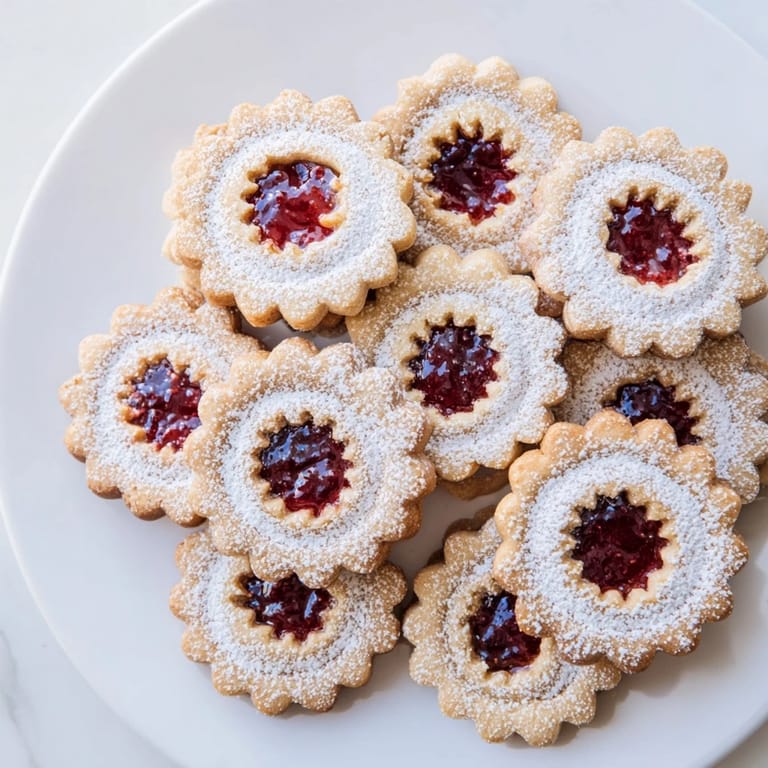
Save There's something about the smell of butter and almonds toasting in the oven that instantly transports me back to my grandmother's kitchen during the holiday season. She'd stand at her counter with two round cutters—one for the cookie bottoms, one for the tops—and I'd watch as she carefully carved little windows into the dough. The first time I tried making these Linzer cookies myself, I was determined to recreate that magic, and the moment I bit into one still warm from the oven, jam glistening through the cutout, I understood why she'd made them every December without fail.
I remember bringing a batch of these to a winter gathering, nervous that they wouldn't hold up during the drive. But when I opened the tin, they were perfect—the jam had set, the powdered sugar still dusting the tops like fresh snow. Someone asked for the recipe that night, and then another person, and by the end of the evening I'd written it down four times on napkins.
Ingredients
- All-purpose flour (2 cups): This is your structure—don't skimp on measuring, and whisk it together with the dry ingredients so everything distributes evenly.
- Finely ground blanched almonds (1 cup): This is what makes the texture tender and gives these cookies their distinctive nuttiness; if you grind your own, pulse until powder-fine to avoid releasing oils.
- Ground cinnamon (1/2 teaspoon): A whisper of warmth that complements both the almond and the jam without overpowering.
- Salt (1/4 teaspoon): It brightens everything and makes the almond flavor pop.
- Unsalted butter (3/4 cup), softened: Room temperature is non-negotiable—cold butter won't cream properly and you'll end up with dense cookies instead of tender ones.
- Powdered sugar (2/3 cup): Creates the tender crumb by incorporating air into the dough.
- Egg yolk (1 large): Binds everything together while keeping the texture delicate.
- Pure vanilla extract (1 teaspoon): Use real vanilla, not imitation; you'll taste the difference.
- Grated lemon zest (1/2 teaspoon): A subtle brightness that lifts the whole flavor profile without tasting citrusy.
- Seedless raspberry jam (3/4 cup): Choose jam you'd actually eat on toast because you'll taste every bit of it; avoid anything artificially stiff or overly gelatinous.
- Powdered sugar for dusting (1/4 cup): For that elegant finish that catches the light.
Tired of Takeout? 🥡
Get 10 meals you can make faster than delivery arrives. Seriously.
One email. No spam. Unsubscribe anytime.
Instructions
- Prepare your dry goods:
- Whisk the flour, almond flour, cinnamon, and salt together in a medium bowl so the cinnamon distributes evenly and you don't have any spice clumps hiding in the dough.
- Cream the butter and sugar:
- In a large bowl, beat softened butter and powdered sugar until the mixture is pale, fluffy, and noticeably lighter in color—this usually takes 2–3 minutes. This step is where the magic happens; the air you're incorporating is what makes the cookies tender.
- Add the flavor:
- Beat in the egg yolk, vanilla, and lemon zest until fully incorporated, scraping the bowl as you go so nothing hides at the bottom.
- Bring it together gently:
- Add the dry mixture to the wet mixture and stir just until a cohesive dough forms—overmixing will lead to tough, dense cookies that won't have that melt-in-your-mouth quality you're after.
- Rest the dough:
- Divide the dough in half, flatten each half into a disk, wrap in plastic wrap, and chill for at least an hour. This gives the gluten time to relax so the cookies won't shrink or spread unevenly.
- Set up your workspace:
- Preheat your oven to 350°F and line two baking sheets with parchment paper. Cold baking sheets are better; if yours are warm, the dough will start to spread before it gets a chance to set.
- Roll with care:
- Working with one disk at a time, roll the dough out on a lightly floured surface to about 1/8 inch thick—thin enough to be delicate but thick enough to hold the jam. A bench scraper helps prevent sticking.
- Cut the bottoms:
- Using a 2-inch round or fluted cutter, cut out cookies and place them on the prepared baking sheets. Keep them about an inch apart so they don't merge as they bake.
- Create the tops with windows:
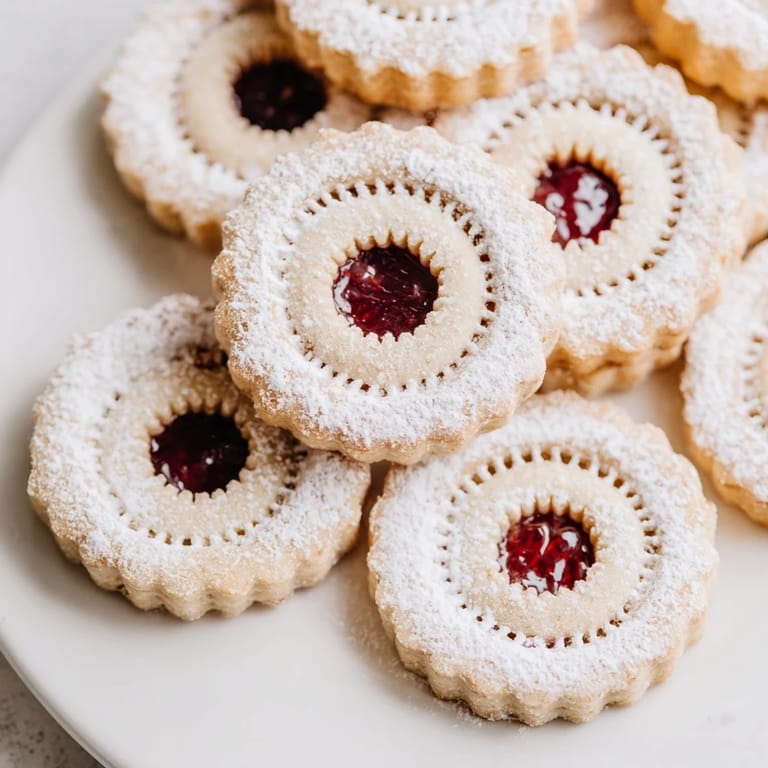
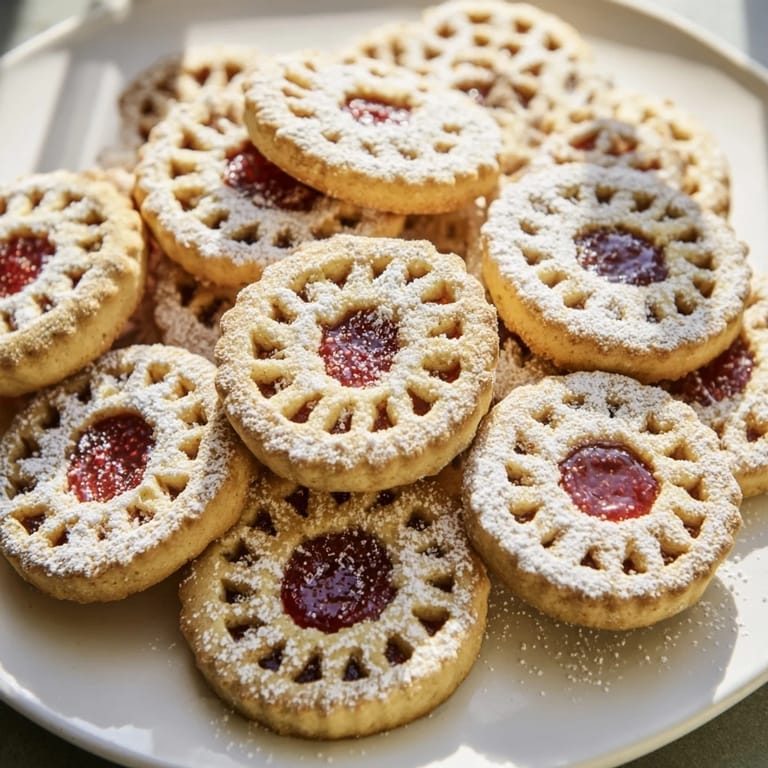
- From the remaining rolled dough, cut out the same 2-inch cookies, then use a 1-inch cutter to remove the centers, creating windows or lattice shapes. This is where the cookies get their signature look.
- Bake to golden:
- Bake for 10–12 minutes until the edges are just beginning to turn golden and the centers feel barely set to the touch. They'll continue to firm up as they cool, so don't wait for them to be completely solid in the oven.
- Cool with patience:
- Let the cookies rest on the hot pan for 2 minutes to set, then transfer them to a wire rack to cool completely. This prevents them from becoming too fragile to handle.
- Add the finishing touch:
- Once cool, dust the top cookies lightly with powdered sugar, making sure it catches in the little windows you created.
- Assemble with the filling:
- Spread about 1 teaspoon of jam on the flat side of each bottom cookie, then place a sugared top over it, jam side down.
- Let them rest:
- Allow the assembled cookies to sit at room temperature for at least 30 minutes so the jam sets and everything binds together properly.
 Save
Save One afternoon, my daughter helped me decorate a batch of these for her school bake sale, and we got jam on everything—our hands, her shirt, even in her hair. But watching her carefully place each powdered sugar-dusted top and then line them up on the cooling rack with such pride reminded me that this recipe isn't really about achieving perfection; it's about sharing something homemade and a little bit of yourself with people you care about.
The Secret to Tender Cookies
The soul of a great Linzer cookie is the interplay between the almond flour and the butter. Almond flour is naturally rich and creates tenderness, but it can make cookies spread if you're not careful. The key is not to skimp on the creaming stage—when you beat the butter and sugar until it's pale and fluffy, you're creating a stable emulsion that traps air. This structure holds the cookies together while keeping them delicate. I've found that adding the dry ingredients by hand at the end, rather than with the mixer, gives you better control and prevents overdevelopment of gluten, which would make them tough.
Jam Selection and Storage
Not all jam is created equal when it comes to baking. Thinner jams will ooze out the sides as the cookies cool, while overly thick, stiff jams are harder to spread evenly and can crack the delicate dough. I look for jams with a smooth, spreadable consistency—usually a seedless variety works best because the seeds can get caught in your spread. Store your finished cookies in an airtight container at room temperature, with parchment or wax paper between layers so the powdered sugar doesn't transfer and the jam doesn't stick everything together. They'll keep for about five days, though honestly they never last that long in my house.
Variations and Troubleshooting
Once you've mastered the basic recipe, you can play with flavors without changing the technique. I've made versions with apricot jam, blackcurrant jam, and even a dark chocolate ganache filling. If you need a nut-free version, simply replace the almond flour with additional all-purpose flour, though you may need to add a tablespoon or two of milk to prevent the dough from becoming too dry. And if your cookies come out too soft and don't hold their shape, it usually means the dough wasn't cold enough before baking or the oven temperature was too low; if they're too dry and crumbly, you may have slightly overworked the dough or overbaked them.
- Experiment with different jam flavors once you're comfortable with the technique.
- Always test your oven temperature with a separate thermometer because even a 25-degree difference affects how these cookies bake.
- Make sure your baking sheets are truly flat and level, or cookies will bake unevenly.
 Save
Save These cookies are more than just a recipe—they're an edible memory of holidays past and an invitation to create new ones. Every time you make them, you're carrying forward a tradition that spans continents and generations.
Recipe FAQs
- → What gives Linzer cookies their unique texture?
The combination of almond flour and all-purpose flour creates a tender yet sturdy texture, while chilling the dough helps maintain its shape and crispness during baking.
- → Can I replace raspberry jam with other fillings?
Yes, apricot or blackcurrant preserves make delicious alternatives, adding different fruity flavors while keeping the same sweet balance.
- → Why is the dough chilled before baking?
Chilling firms the dough, preventing spread and ensuring the cookies hold their delicate lattice shape for a crisp finish.
- → How do I achieve the delicate lattice pattern on top?
Use a smaller cookie cutter to cut out the centers of the top cookies, creating the traditional window pattern that highlights the jam inside.
- → Are there nut-free options available for these cookies?
Yes, substituting almond flour with additional all-purpose flour creates a nut-free version while maintaining a tender texture.