 Save
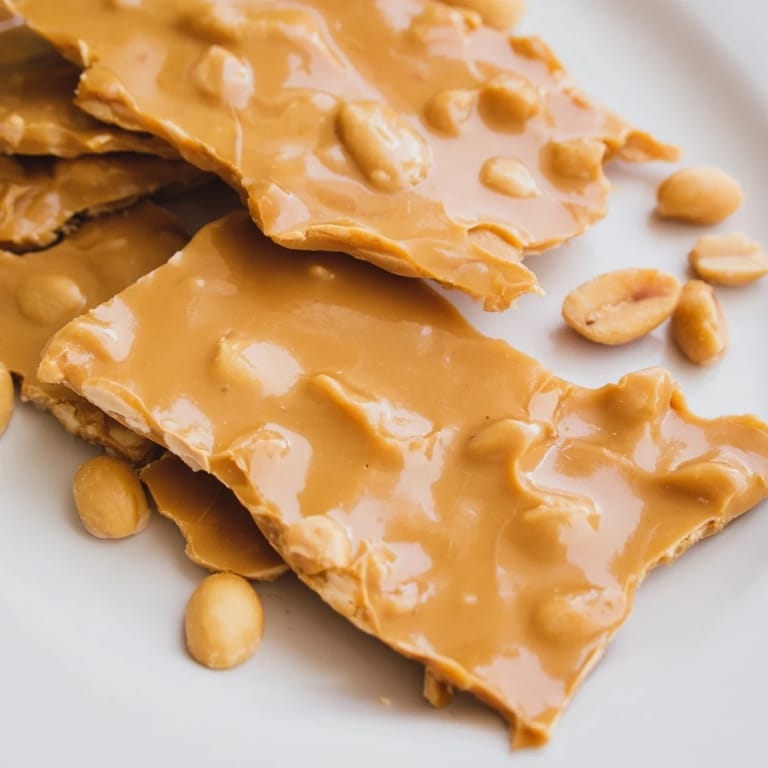
Save My neighbor brought over a tin of homemade peanut brittle one December, and I remember standing in my kitchen at midnight, unable to stop eating it straight from the container. The crackling sound it made between my teeth, the way the butter dissolved on my tongue—it was such a contrast to the gritty sweetness of the peanuts. I'd always assumed brittle was some kind of culinary magic reserved for people who owned candy thermometers and knew what "hard crack stage" meant. But then she told me it was embarrassingly simple, just sugar and heat and timing, and I realized I'd been intimidated by something that actually just takes 20 minutes.
I made this for the first time during a snowstorm when my kids were stuck home from school, and we stood around the stove watching the sugar turn from clear to deep amber. My son insisted on being the one to add the baking soda, and when it exploded into this golden foam, he genuinely believed he'd discovered something new. The three of us spread it onto the baking sheet together, and for once, nobody argued about who got the biggest piece.
Ingredients
- Granulated sugar (1 cup): This is your base, and it needs to be white and fine—brown sugar will muddy the color and flavor you're building toward.
- Light corn syrup (1/2 cup): This keeps the sugar from crystallizing and makes the texture silky rather than grainy, which is the whole point of brittle.
- Water (1/4 cup): Just enough to help the sugar dissolve at the start; most of it will cook away.
- Salt (1/4 tsp): A tiny amount that somehow makes everything taste more like itself—don't skip it.
- Unsalted butter (2 tbsp): Cut it into pieces so it melts quickly when you add it at the end, ensuring even distribution.
- Vanilla extract (1 tsp): A small flourish that adds warmth and keeps the candy from tasting one-dimensional.
- Roasted, unsalted peanuts (1 1/2 cups): Pre-roasted means they're ready to go; raw peanuts won't have that deep flavor you need.
- Baking soda (1 tsp): This is what turns the mixture from dense to airy, and it's why the whole thing suddenly foams up like a volcano.
Tired of Takeout? 🥡
Get 10 meals you can make faster than delivery arrives. Seriously.
One email. No spam. Unsubscribe anytime.
Instructions
- Set your stage:
- Line your baking sheet with parchment or a silicone mat, then give it a light grease with butter or oil. This is the moment where panic happens later, so don't skip it.
- Combine and dissolve:
- In your heavy saucepan, mix sugar, corn syrup, water, and salt over medium heat. Stir gently just until the sugar disappears into the liquid—you're not making a sauce, just helping things along.
- Stop stirring and watch:
- Once it boils, clip your candy thermometer to the side of the pan and let it go. This is the hardest part because your instinct is to stir, but you'll actually create crystals if you do.
- Chase the temperature:
- Keep the heat at medium and let it bubble away for 10 to 15 minutes until the thermometer hits 300°F. The mixture will gradually shift from pale yellow to amber, and you'll smell this incredible nutty-caramel aroma filling your kitchen.
- Move fast now:
- Pull it from heat and quickly stir in the butter and vanilla. The temperature will drop slightly, but that's fine—you're still in the danger zone heat-wise.
- Add the peanuts:
- Dump in all the peanuts and stir until every single one is coated in that golden mixture. Work quickly but carefully.
- The foam moment:
- Add the baking soda and stir hard. The mixture will suddenly puff up and lighten, almost doubling in volume. This is exciting, not scary—just keep stirring for a few seconds.
- Spread and set:
- Pour everything onto your prepared baking sheet and use a greased spatula to push it into a thin, even layer about 1/4 inch thick. You've got maybe 30 seconds before it starts setting, so move with purpose but don't panic.
- Cool completely:
- Leave it alone for at least 30 minutes. Resist the urge to break it early; it needs time to harden all the way through.
- Break and store:
- Once fully cooled, crack it into pieces with your hands or a wooden spoon. Store in an airtight container away from humidity, and it'll stay crispy for two weeks.
 Save
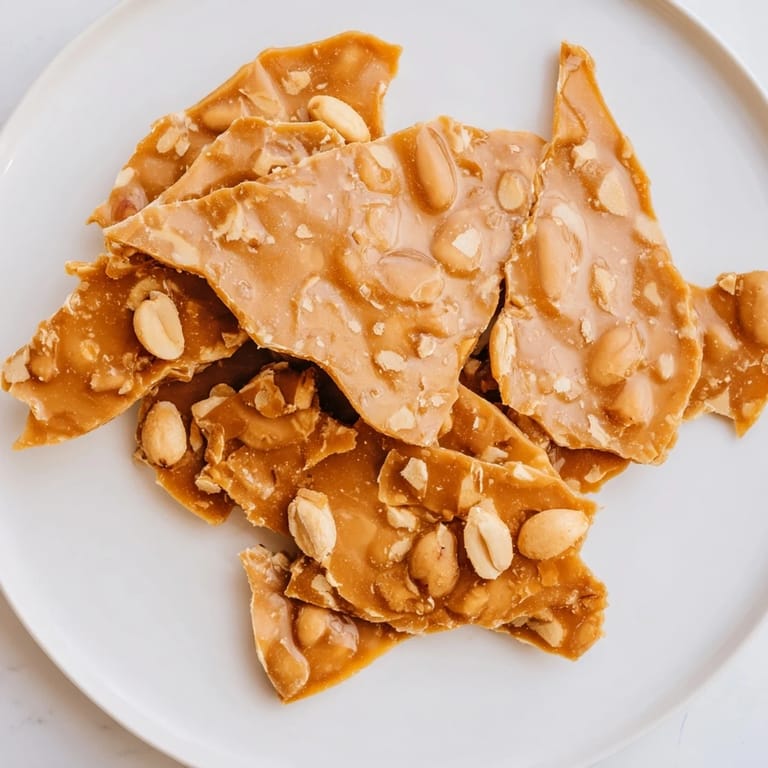
Save There's something about making candy that feels like you're in on a secret. When my mother-in-law tasted my first batch, she kept asking what store I'd bought it from, and I got to tell her I'd made it—which felt ridiculous and wonderful all at once.
The Science Behind the Crunch
Brittle works because of temperature. At 300°F, sugar moves into what candy makers call the hard crack stage, where it becomes rigid and shatters cleanly instead of bending. The corn syrup prevents graininess by interfering with sugar crystal formation, keeping everything smooth and glassy. The baking soda does double duty: it neutralizes the acid in the caramel and creates tiny air pockets, which is why the mixture foams when you add it—those pockets are what make brittle snap rather than bend.
Variations Worth Trying
The beauty of brittle is that the technique stays the same while the flavors change dramatically. Cashews or almonds bring a different kind of richness, while pecans make it feel almost buttery. I've added a pinch of cayenne for heat, and I've scattered flaky sea salt on top before it cooled, which creates this sophisticated salty-sweet thing that people genuinely cannot stop eating. You can also try adding a 1/2 teaspoon of espresso powder to the sugar mixture, which deepens the caramel flavor without making it taste like coffee.
Troubleshooting Moments
If your brittle turns out chewy instead of crispy, your temperature didn't reach high enough—next time, trust the thermometer and wait for 300°F. If it tastes burnt or bitter, you cooked it past 300°F, so pull the pan from heat the instant the thermometer hits the mark. If the mixture crystallized while cooking, it means you stirred it after it started boiling, which is why the "no stirring" rule exists. If humidity turned your batch soft and sticky, store it in an airtight container with a packet of silica gel or a few saltines to absorb moisture.
- Always grease your tools—the spatula, the thermometer clip, everything—because hardened candy is nearly impossible to scrape off.
- Make brittle on dry days and store it in an airtight container away from the refrigerator, since cold temperatures can cause condensation.
- If you're doubling the recipe, use the same cooking time and temperature, just watch it carefully since larger batches can heat unevenly.
 Save
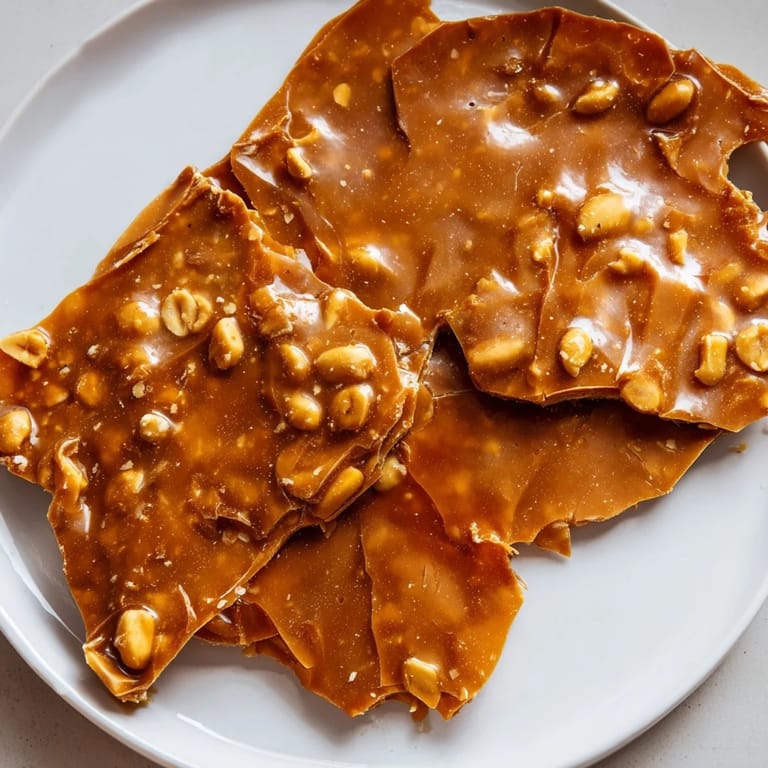
Save Homemade brittle is proof that the simplest things often taste the best. Make a batch, share it generously, and watch people's faces light up when they realize you made it in your own kitchen.
Recipe FAQs
- → What temperature should the sugar mixture reach?
The sugar mixture should be heated to 300°F (150°C), known as the hard crack stage for optimal brittleness.
- → Can I use different nuts instead of peanuts?
Yes, almonds, cashews, or pecans can replace peanuts for a unique flavor and texture.
- → Why is baking soda added to the mixture?
Baking soda creates a foamy texture, lightening the toffee and making the brittle crispier.
- → How do I prevent the brittle from sticking to the baking sheet?
Line the baking sheet with parchment paper or a silicone mat and lightly grease it before pouring the mixture.
- → What is the best way to store the finished brittle?
Store in an airtight container to keep the brittle crisp and fresh, away from humidity, for up to two weeks.