 Save
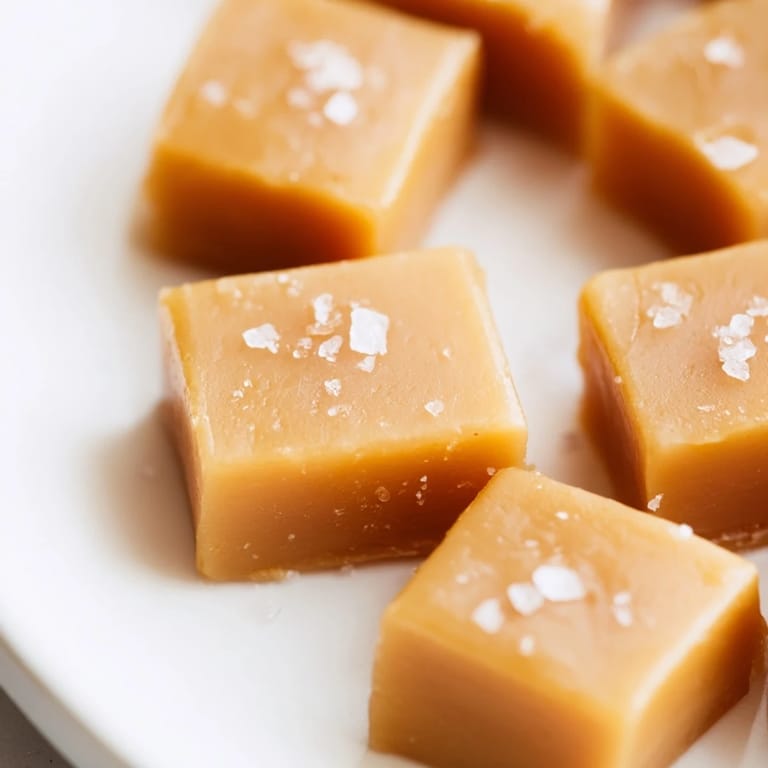
Save There's something almost meditative about watching sugar transform into liquid gold, especially when you know it's heading toward that perfect moment where a pinch of flaky sea salt crashes the party. I made these caramels on a whim one January afternoon when the kitchen felt too quiet, and somehow they've become the thing I'm known for at every gathering since. The beauty of sea salt caramels is their simplicity masking a tiny bit of kitchen magic—just sugar, cream, butter, and timing, with that finishing touch of salt that makes people pause mid-bite and ask what you did differently.
I'll never forget serving these to my neighbor who had just moved in, and watching her close her eyes after that first bite. She said they reminded her of something from a fancy chocolate shop, but better because they were warm and I'd made them in my own kitchen. That's when I realized these caramels were more than candy—they became a quiet way to say hello to people.
Ingredients
- Heavy cream: This is your insurance policy against grainy caramel; it cools everything down and brings silky smoothness.
- Unsalted butter: Cut into pieces so it melts faster and blends evenly into that warm cream.
- Granulated sugar: The star player—watch it carefully as it shifts from clear to golden.
- Light corn syrup: Prevents crystallization without changing the flavor one bit.
- Water: Just enough to help the sugar dissolve before the real cooking begins.
- Pure vanilla extract: Stir this in at the very end so the heat doesn't cook off those delicate notes.
- Fine sea salt (mixed in): A small amount dissolved right into the caramel for depth.
- Flaky sea salt (finishing): Maldon or similar—this is where the magic happens, so don't skip it.
Tired of Takeout? 🥡
Get 10 meals you can make faster than delivery arrives. Seriously.
One email. No spam. Unsubscribe anytime.
Instructions
- Prepare your pan:
- Line your 8x8-inch pan with parchment paper and let it overhang on two sides so you can lift everything out later without fighting. A light butter coating keeps everything from sticking.
- Warm the cream and butter:
- Heat them together gently—you want this mixture hot and ready, but never boiling. Set it aside and let it stay warm while you work on the sugar.
- Combine and cook the sugar mixture:
- Stir sugar, corn syrup, and water together just until combined, then stop stirring. Let the heat do the work; watching sugar dissolve without a spoon is its own kind of meditation.
- Build the caramel:
- Crank the heat up and let it boil hard, resisting the urge to stir. You're waiting for that moment when it shifts to a pale golden color and your thermometer reads 320°F—this usually takes 8-10 minutes.
- Add the cream mixture:
- Pour it in slowly and carefully because the mixture will bubble up dramatically and that's completely normal. Stir constantly and keep cooking until you hit 245°F for soft caramels or 250°F if you like them with a bit more chew.
- Finish and pour:
- Pull it off heat, stir in vanilla and fine sea salt, then pour immediately into your pan. Those five minutes of sitting time lets everything settle before you add the flaky salt on top.
- Cool and cut:
- Patience here matters—give it two full hours to cool completely at room temperature so it sets properly. Cut with a sharp knife and wrap each piece in wax paper to keep them from sticking together.
 Save
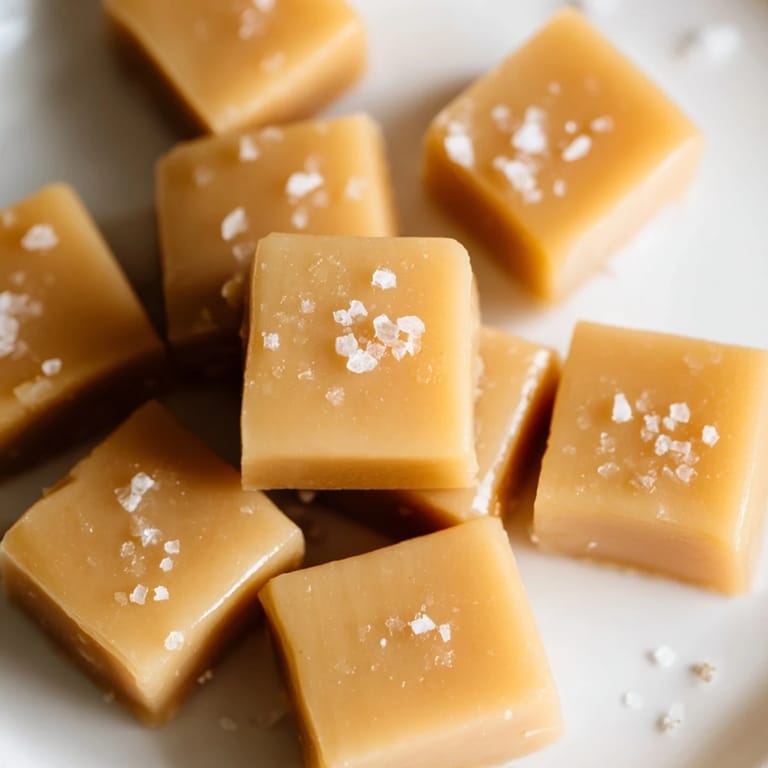
Save I learned the hard way that rushing the cooling time doesn't save time—it just gives you caramels that don't hold their shape. Now I use that two hours to do other things, and somehow the waiting makes me appreciate them more when they're finally ready to wrap.
Why Temperature Matters So Much
The difference between 245°F and 250°F might sound small, but it's the difference between a caramel that melts on your tongue and one that has a little more structure. Every degree counts, which is why that thermometer isn't just a tool—it's your partner in getting this right. The first time I ignored it and went by look alone, I ended up with taffy instead of proper caramels.
The Salt Make It All Work
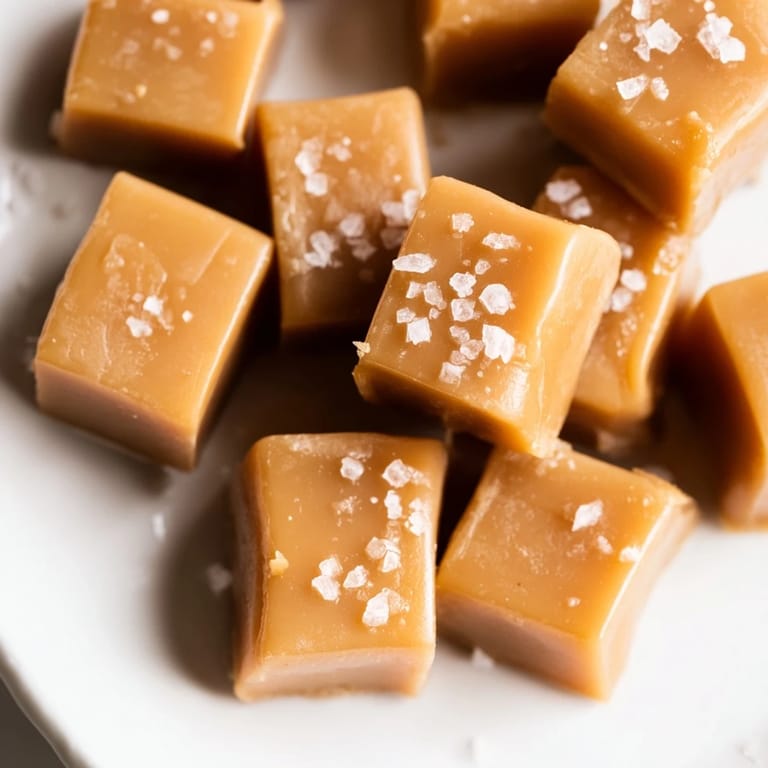
Salt doesn't just sit on top of these caramels; it changes how your whole mouth experiences them. The fine sea salt mixed into the caramel adds a subtle depth, while the flaky sea salt on top provides that unexpected crunch and visual appeal. Think of it as seasoning your dessert the same way you'd season anything else—a little goes a long way, and it makes people lean in and wonder what you did.
- Don't skip the fine sea salt that gets mixed in; it's doing heavy lifting in the flavor department.
- Sprinkle the flaky salt generously but evenly so every piece gets that seasoning promise.
- Store them wrapped and separate so they don't absorb moisture and lose their texture.
 Save
Save These caramels are proof that the simplest ingredients and a little bit of attention can create something people remember. Make a batch once, and suddenly you'll find yourself making them again just to see that moment when someone bites down and finds that perfect balance of sweet and salt.
Recipe FAQs
- → What temperature should the caramel reach for soft texture?
Cook the caramel to about 245°F (118°C) for soft caramels. Higher temperatures will produce firmer results.
- → Why is flaky sea salt added on top?
Flaky sea salt adds a subtle crunch and enhances the sweet caramel flavor by introducing a delicate salty contrast.
- → Can I use brown butter to enhance flavor?
Yes, browning the butter before combining it with cream adds a rich, nutty depth to the caramel’s taste.
- → How can I prevent the caramel from sticking after cooling?
Wrap individual pieces in wax paper or cellophane to keep them separate and prevent sticking.
- → Is a candy thermometer necessary?
Using a candy thermometer is important to hit the exact temperature for ideal caramel texture and consistency.