 Save
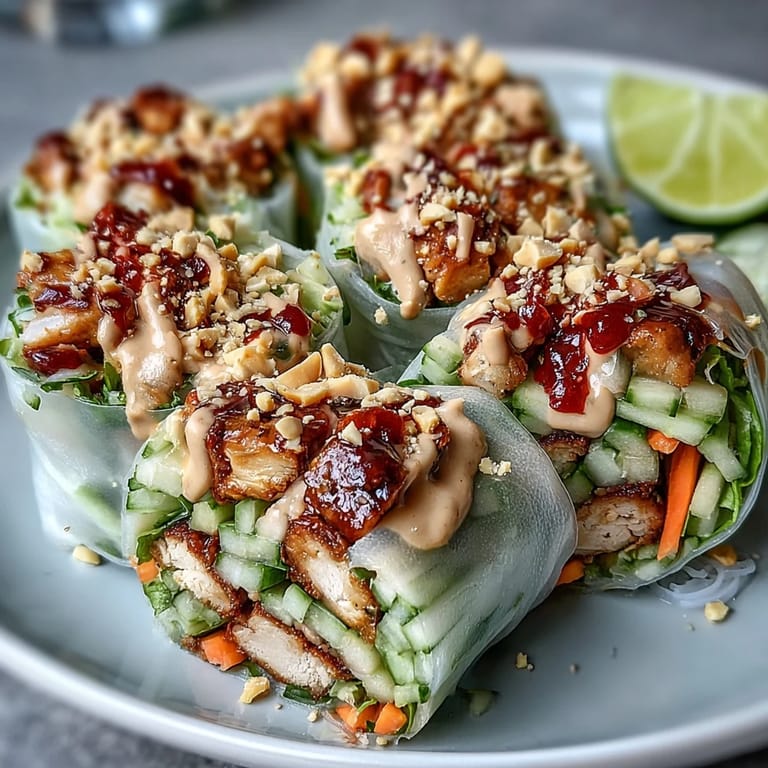
Save There's something magical about eating with your hands that makes food taste better, and this rice paper roll bowl captured that feeling perfectly when I first made it on a sweltering afternoon with leftover grilled chicken and whatever vegetables I could find in the crisper drawer. The crispy rice paper shards crackled between my teeth, the vegetables snapped with freshness, and that peanut sauce tied everything together like a warm hug. It felt like deconstructed spring rolls without the fussy rolling, and honestly, I've been making it ever since because it's the kind of dish that works with whatever you have on hand.
I made this for a friend who'd just gone vegetarian, and watching her eyes light up when she bit into the tofu version told me everything I needed to know about how satisfying this bowl truly is. She asked for the recipe before she'd even finished eating, and now she makes it every Thursday for meal prep because it stays fresh and interesting all week long.
Ingredients
- Rice paper sheets: These delicate wrappers transform when softened just right, becoming pliable enough to cut into shards that stay wonderfully crispy even after dressing, so don't skip the careful timing.
- Jasmine rice or vermicelli noodles: Use jasmine rice if you want something slightly sticky and fragrant, or stick with vermicelli for a lighter, more delicate base that won't overpower the fresh vegetables.
- Grilled chicken breast, pressed tofu, or cooked shrimp: Choose whichever protein speaks to you that day, but make sure it's seasoned well because it's the anchor for all those bright flavors dancing around it.
- Carrot, cucumber, red bell pepper, red cabbage: The vegetable selection is where you get to play with color and crunch, so julienne or slice them thinly enough that they'll be tender but still snappy.
- Mixed salad greens, fresh mint, and fresh cilantro: These herbs aren't just garnish, they're the soul of the dish, so use them generously and avoid the bagged stuff if you can because the difference is noticeable.
- Creamy peanut butter: The smooth kind works best here because you want it to whisk into a silky sauce without any graininess that might distract from the other flavors.
- Soy sauce, hoisin, rice vinegar, lime juice, and sriracha: This combination creates a sauce that's salty, slightly sweet, tangy, and spicy all at once, so taste as you go because preferences vary wildly.
- Roasted peanuts and fried shallots: These toppings add the final crunch and depth, but if you can't find fried shallots, toasted breadcrumbs work in a pinch.
Tired of Takeout? 🥡
Get 10 meals you can make faster than delivery arrives. Seriously.
One email. No spam. Unsubscribe anytime.
Instructions
- Soften the rice paper with a gentle touch:
- Fill a shallow dish with warm water and dip each sheet for just 5 to 10 seconds, then lay it on a clean kitchen towel where it will continue to soften slightly. I learned the hard way that over-soaking turns them into soup, so set a timer if you're the forgetful type.
- Transform the softened sheets into shards:
- Once slightly cooled, stack a few sheets together and cut them into rough strips or bite-sized squares using a sharp knife or kitchen shears. The jagged edges are what you want here because they'll catch the sauce and stay crispy longer.
- Cook your protein to golden perfection:
- Whether you're grilling chicken, pan-frying tofu, or gently warming shrimp, make sure it's cooked through and seasoned generously with salt and pepper. Let it cool slightly before slicing or cubing so you don't burn your fingers when you handle it.
- Prepare vegetables with knife skills and intention:
- Wash everything thoroughly, peel what needs peeling, and slice into thin, even pieces so they cook evenly from the heat of the warm bowl and hot sauce. A mandoline makes this faster, but a sharp chef's knife works just fine if you take your time.
- Whisk the peanut sauce into silky existence:
- Combine peanut butter, soy sauce, hoisin, rice vinegar, lime juice, and sriracha in a bowl, then add warm water a tablespoon at a time until it reaches the consistency of heavy cream. Taste it and adjust the flavors because this sauce is forgiving and wants to be exactly what you love.
- Build each bowl with intention and balance:
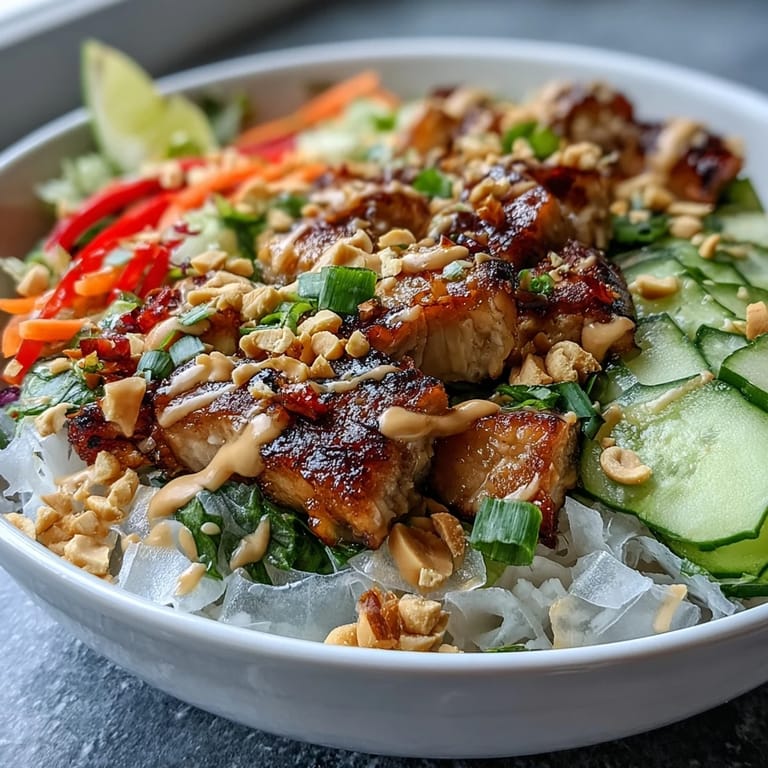
- Start with rice or noodles as your base, then layer in rice paper shards, vegetables, greens, herbs, and protein in whatever order feels right to you. The beauty of a bowl is that there's no wrong way to arrange it.
- Finish with sauce and sparkle:
- Drizzle the peanut sauce generously over everything, then crown it with chopped peanuts and fried shallots for texture, and serve with lime wedges so each person can squeeze fresh brightness into their bite.
 Save
Save My neighbor asked me to make this for a small dinner party she was throwing, and by the end of the night, three people had their phones out asking for the recipe while still eating their bowls. That's when I realized this isn't just a bowl, it's a conversation starter and a moment where everyone gets to customize their own adventure.
The Rice Paper Magic
The first time I cut rice paper, I was convinced I'd ruin it, but then something shifted when I realized those delicate sheets were meant to become these wonderful crispy shards that add texture without weighing anything down. They stay crunchy even after sitting in the sauce for a few minutes because of their structure, which is why they're so different from regular noodles and worth the small effort to prepare them properly.
Playing With Your Protein
I've made this bowl with chicken on Mondays, tofu on Wednesdays, and shrimp when I'm feeling fancy, and each version tells a different story while tasting completely harmonious. The beauty is that the sauce and vegetables are so flavorful that whatever protein you choose becomes perfect, so don't stress about getting it exactly right.
Sauce Chemistry and Customization
The peanut sauce is actually a study in balance, where salty soy and umami-rich hoisin are brightened by lime and rice vinegar, then rounded out by creamy peanut butter, and finished with a whisper of heat from sriracha if you want it. Once you understand how these elements work together, you can adjust each one to match your mood, your palate, or what you're serving it with.
- If you love heat, double the sriracha or add fresh sliced Thai chilies directly into your bowl.
- For a lighter sauce, swap some peanut butter with tahini or almond butter to keep the richness but change the flavor profile slightly.
- Always taste the sauce before serving because homemade sauces vary depending on the brands you use and the temperature of your water.
 Save
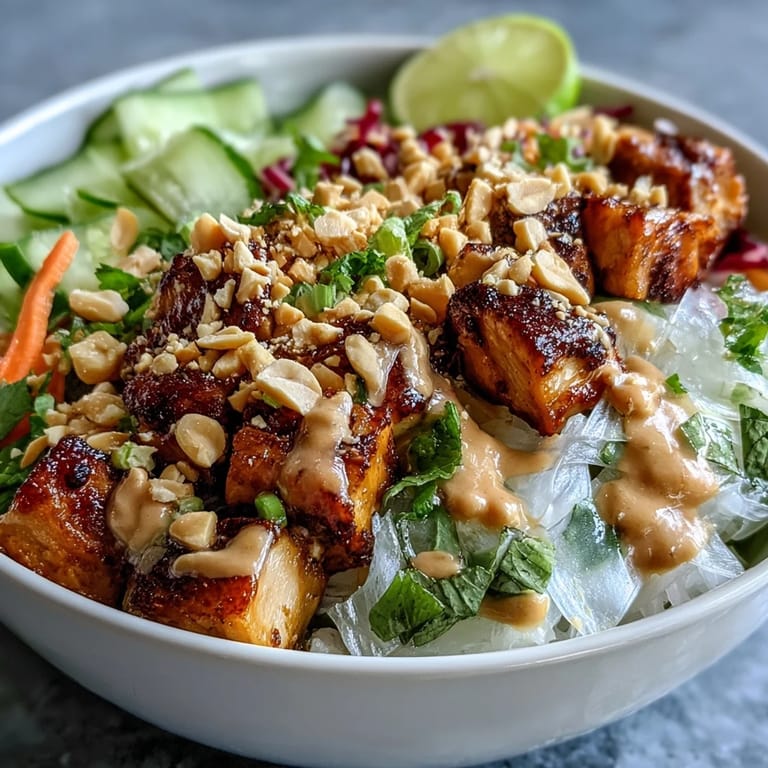
Save This bowl has become my answer to the question of what to eat when you want something fresh and satisfying but don't have much time. It's proof that deconstructed food can be just as beautiful and delicious as the original, maybe even better.
Recipe FAQs
- → How do I keep rice paper from getting soggy?
Work quickly when softening the rice paper—dip each sheet for just 5-10 seconds until pliable, then immediately cut into strips. The sauce is added just before serving, which prevents sogginess. If meal prepping, store rice paper pieces separately from vegetables and sauce.
- → Can I make this bowl ahead of time?
Yes, prep all components separately in advance. Store vegetables, protein, and rice paper pieces in individual containers. Keep the peanut sauce in a sealed jar. When ready to eat, warm the sauce slightly with water if it has thickened, then assemble and drizzle.
- → What other protein options work well?
Beyond chicken, tofu, and shrimp, try sliced beef steak, grilled salmon, or edamame for a plant-based boost. Leftover rotisserie chicken works beautifully for a shortcut. For a lighter version, double up on vegetables and add soft-boiled eggs.
- → How can I adjust the peanut sauce consistency?
The sauce should be thick but pourable. Start with 2 tablespoons of warm water and whisk thoroughly. Add more water one tablespoon at a time until it reaches your desired thickness. If it becomes too thin, add another teaspoon of peanut butter.
- → What vegetables can I substitute?
Shredded Brussels sprouts, snap peas, or radishes add great crunch. Try mango or papaya for sweetness. Sliced jalapeños provide heat, while mung bean sprouts or shredded kohlrabi offer authentic Vietnamese flair. Use whatever looks fresh at the market.
- → Is there a nut-free alternative to the peanut sauce?
Sunflower butter or tahini make excellent substitutes. You'll still get that creamy richness, though the flavor profile shifts slightly. Adjust the lime juice and sweetener to balance the earthiness of these alternatives. Cashew butter also works beautifully.