 Save
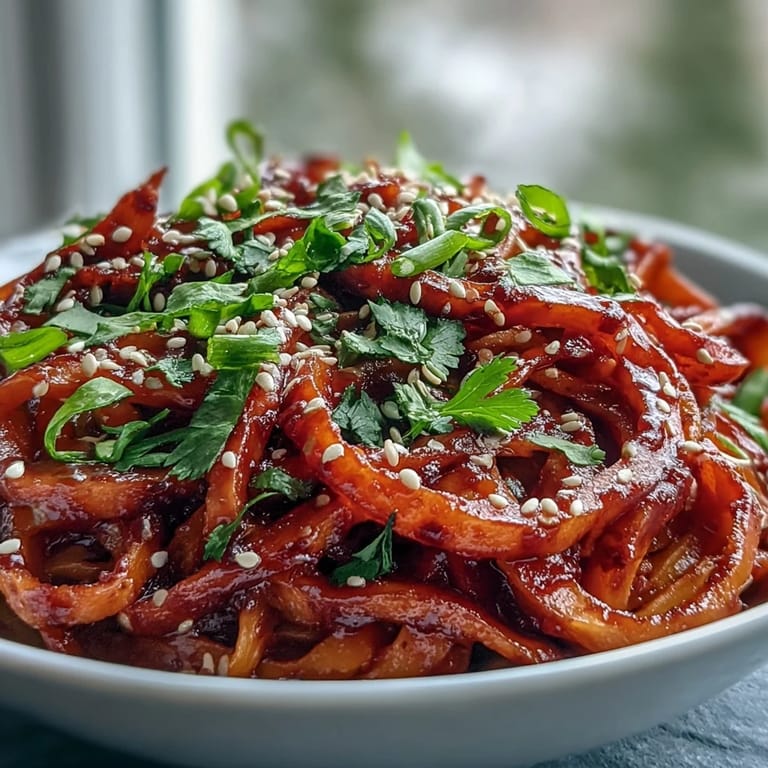
Save I was staring at a swede in my kitchen one afternoon, wondering why I'd bought something I'd only ever boiled into mush. Then I remembered a spiralizer buried in a drawer and thought, why not treat it like a vegetable that deserves better? The ribbons came out pale and promising, and I knew immediately they'd love a good roast and something bold to wake them up. That's when the gochujang in my fridge started calling. What came together that day was nothing I'd planned, but everything I didn't know I needed.
I made this for a friend who swore she hated swede, mostly because of childhood dinners involving grey, watery cubes. She took one bite, paused, and asked what vegetable this actually was. When I told her, she laughed so hard she nearly choked on a noodle. Now she texts me every time she sees swede at the market, which is both flattering and slightly ridiculous. That night proved that context, seasoning, and a little heat can completely rewrite a vegetable's reputation.
Ingredients
- Swede (rutabaga): The star here, and when roasted into ribbons it gets sweet, caramelized edges that contrast beautifully with its tender centre.
- Rice noodles: They're neutral and slippery in the best way, letting the dressing cling without competing for attention.
- Gochujang: This Korean chili paste brings fermented depth, gentle heat, and a slight sweetness that makes everything taste more alive.
- Maple syrup: Balances the heat and saltiness while adding a glossy, sticky quality to the dressing.
- Soy sauce: The umami backbone that makes every bite feel fuller and more savory.
- Toasted sesame oil: A few drops go a long way, adding nutty warmth that ties the whole dish together.
- Garlic and ginger: Freshly grated, they wake up the dressing with sharp, aromatic brightness.
- Spring onions: Their mild bite and crisp texture add contrast to the soft noodles and roasted swede.
- Sesame seeds: Toasted until golden, they add crunch and a final layer of nuttiness.
- Fresh cilantro: A handful on top makes everything feel fresh and just finished.
Tired of Takeout? 🥡
Get 10 meals you can make faster than delivery arrives. Seriously.
One email. No spam. Unsubscribe anytime.
Instructions
- Prep the swede:
- Preheat your oven to 220°C (425°F). Peel the swede and slice it into thin ribbons using a vegetable peeler or mandoline, then toss them with vegetable oil, salt, and pepper until every piece is lightly coated.
- Roast until golden:
- Spread the ribbons in a single layer on a baking sheet and roast for 25 to 30 minutes, flipping them halfway through so they caramelize evenly and develop crispy, sweet edges.
- Cook the noodles:
- While the swede roasts, cook the rice noodles according to the package directions, then drain and rinse them under cold water to stop them from sticking together.
- Make the dressing:
- In a bowl, whisk together gochujang, soy sauce, maple syrup, rice vinegar, sesame oil, garlic, ginger, chili flakes, and water until smooth and pourable.
- Toss everything together:
- In a large mixing bowl, combine the roasted swede, noodles, spring onions, carrot, and bean sprouts if using. Pour the dressing over and toss gently until every strand is glossy and coated.
- Serve and garnish:
- Divide among bowls and top with toasted sesame seeds and fresh cilantro. Serve immediately while the swede is still warm and the noodles are silky.
 Save
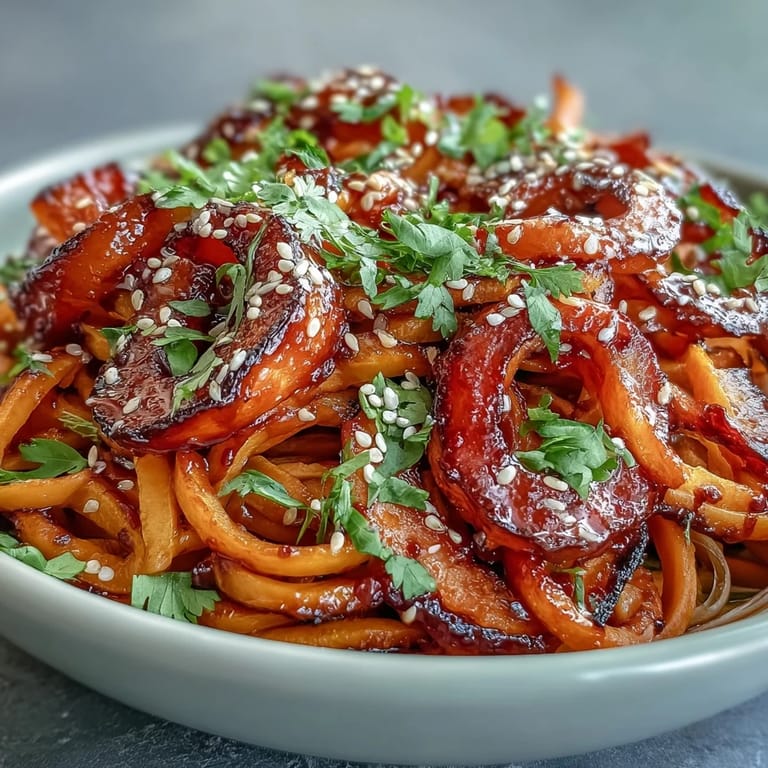
Save There's something about a bowl of glossy noodles, still warm and smelling like sesame and chili, that makes you sit down and actually pay attention to your food. I've served this on nights when I needed comfort but didn't want anything heavy, and it's never let me down. It's become the dish I make when I want to feel like I'm taking care of myself without making a big production out of it. Somehow, a humble swede and a jar of gochujang can do that.
Making It Your Own
This recipe is forgiving and loves additions. I've tossed in pan-fried tofu for protein, added edamame straight from the freezer, and even stirred through leftover roasted mushrooms. If you're not a cilantro person, try mint or Thai basil instead. The dressing also works beautifully as a marinade for vegetables or a dipping sauce for spring rolls, so make extra and keep it in a jar.
What to Serve Alongside
I like to keep things simple and let the noodles be the main event. A small side of pickled radish or cucumber adds a sharp, refreshing contrast. If you want something more substantial, steamed bok choy or sautéed greens with garlic round out the meal without stealing focus. A cold lager or a crisp Riesling cuts through the richness and cools down the heat in the best way.
Storage and Reheating
Leftovers keep well in the fridge for up to three days, though the noodles will absorb some of the dressing and soften. I actually don't mind this, it becomes more like a cold noodle salad and works great for lunch straight from the container. If you want to reheat it, do so gently in a pan with a splash of water to loosen everything up again.
- Store the dressing separately if you're meal prepping to keep the noodles from getting too soft.
- Add fresh garnishes like sesame seeds and cilantro just before serving for the best texture.
- If reheating, don't microwave too long or the noodles will turn rubbery.
 Save
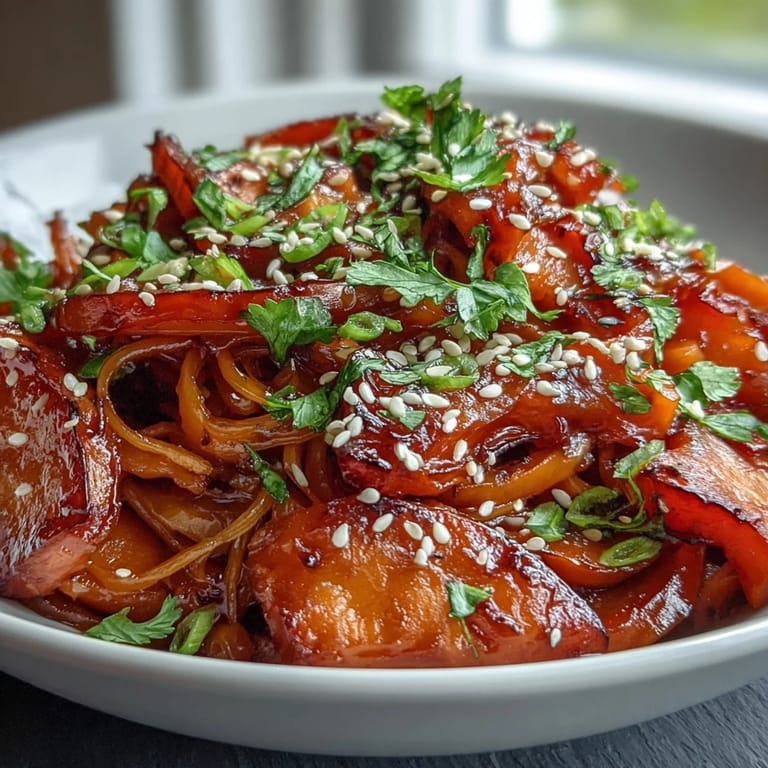
Save This dish taught me that the vegetables we overlook often just need a little imagination and the right company. Give it a try, and you might find yourself looking at swede in a completely new light.
Recipe FAQs
- → Can I substitute swede with another vegetable?
Yes, you can use parsnips, sweet potato, or butternut squash cut into ribbons. Adjust roasting time based on the vegetable's density and moisture content.
- → How spicy is this dish?
The heat level is moderate, coming from gochujang paste. You can reduce the gochujang by half for a milder version or add extra chili flakes for more intensity.
- → Can I make this ahead of time?
The components can be prepped separately and stored for up to 2 days. Roast the swede and prepare the dressing in advance, then toss with freshly cooked noodles before serving for best texture.
- → What can I use instead of rice noodles?
Rice vermicelli, soba noodles, or even spiralized zucchini work well. For a grain-free option, use kelp noodles or additional vegetable ribbons.
- → How do I store leftovers?
Store in an airtight container in the refrigerator for up to 3 days. The noodles may absorb the dressing, so add a splash of sesame oil or extra dressing when reheating.
- → Is gochujang gluten-free?
Traditional gochujang may contain wheat. Look for certified gluten-free versions at specialty stores or use tamari instead of soy sauce and verify all ingredient labels.