 Save
Save There's something about the sizzle of marinated chicken hitting a hot pan that makes me feel like I'm cooking in a sun-drenched kitchen somewhere along the Aegean coast, even though I'm standing in my modest apartment. The first time I made Mediterranean chicken gyros, I was chasing a memory of a street vendor in Athens who assembled these with such practiced ease that I watched him make three while barely blinking. I decided that afternoon to stop just dreaming about it and actually recreate that magic at home, and what emerged from my kitchen was close enough to transport me right back.
I still remember my roommate walking into the kitchen mid-assembly, drawn by the smell of charred chicken and fresh herbs, and stealing a freshly made gyro right off the plate before I could even arrange the garnish properly. She took one bite and just went quiet—the kind of quiet that means you've nailed something. That moment made me realize this recipe wasn't just about nostalgia; it was about creating something simple enough to make on a Tuesday night but impressive enough to earn that speechless reaction.
Ingredients
- Extra-virgin olive oil: This is your flavor foundation, so don't reach for the light stuff—the peppery finish matters in both the marinade and tzatziki.
- Chicken thighs: They're more forgiving than breasts and stay juicy even if you accidentally overcook them by a minute or two.
- Dried oregano: Mediterranean cooking relies on this, and its earthy warmth is irreplaceable—fresh won't give you the same concentrated punch.
- Greek yogurt: Full-fat is non-negotiable here; the low-fat versions make the tzatziki grainy and thin.
- Feta cheese: Crumbled rather than pre-crumbled if you can find it—the texture stays better and the flavor is cleaner.
- Fresh cucumber: The water content is your enemy in tzatziki, which is why squeezing it until your hands hurt is actually the secret step.
- Fresh dill: It's bright and herbaceous in a way that dried dill can never replicate, so save the dried version for emergencies only.
- Kalamata olives: Pitting them yourself takes thirty seconds longer than buying pitted, but you'll taste the difference in every bite.
Tired of Takeout? 🥡
Get 10 meals you can make faster than delivery arrives. Seriously.
One email. No spam. Unsubscribe anytime.
Instructions
- Mix your marinade into a fragrant paste:
- Whisk together the olive oil, lemon juice, garlic, oregano, thyme, paprika, cumin, cayenne if you're feeling brave, salt, and pepper in a large bowl until the aromatics release and the whole mixture smells like a Mediterranean dream. This is where patience pays off—don't rush the whisking.
- Coat the chicken thoroughly and let time do the work:
- Toss the thinly sliced chicken into your marinade, making sure every piece gets coated, then cover and refrigerate for at least 30 minutes, though overnight will reward you with flavor that runs deep into the meat. The longer it sits, the more the acid from the lemon tenderizes and the oregano penetrates.
- Prepare your tzatziki while waiting:
- Peel and seed your cucumber, grate it, then wrap it in a kitchen towel and squeeze with determination until you're amazed at how much water comes out—this is the step that separates creamy from watery. Combine the drained cucumber with Greek yogurt, crumbled feta, minced garlic, lemon juice, olive oil, and fresh dill, then taste and season with salt and pepper.
- Get your pan screaming hot and ready:
- Heat a large skillet or grill pan over medium-high heat until a drop of water dances across the surface before evaporating. Drizzle with olive oil if you're not using a nonstick surface.
- Cook the chicken until it develops a golden crust:
- Remove chicken from the marinade, shaking off excess, and lay it in a single layer in the pan—don't crowd it or you'll steam instead of sear. Let it cook 5-7 minutes per side until you see that beautiful charred edge and the internal temperature reaches 165°F.
- Let it rest and breathe:
- Transfer the cooked chicken to a cutting board and give it 5 minutes of peace to redistribute its juices. This keeps every bite tender and juicy instead of stringy.
- Warm your pita just enough:
- A dry skillet for 1-2 minutes per side or foil-wrapped in a 300°F oven does the trick—you want them soft and pliable, not crispy. Cold pita tears apart and ruins the whole experience.
- Assemble with intention:
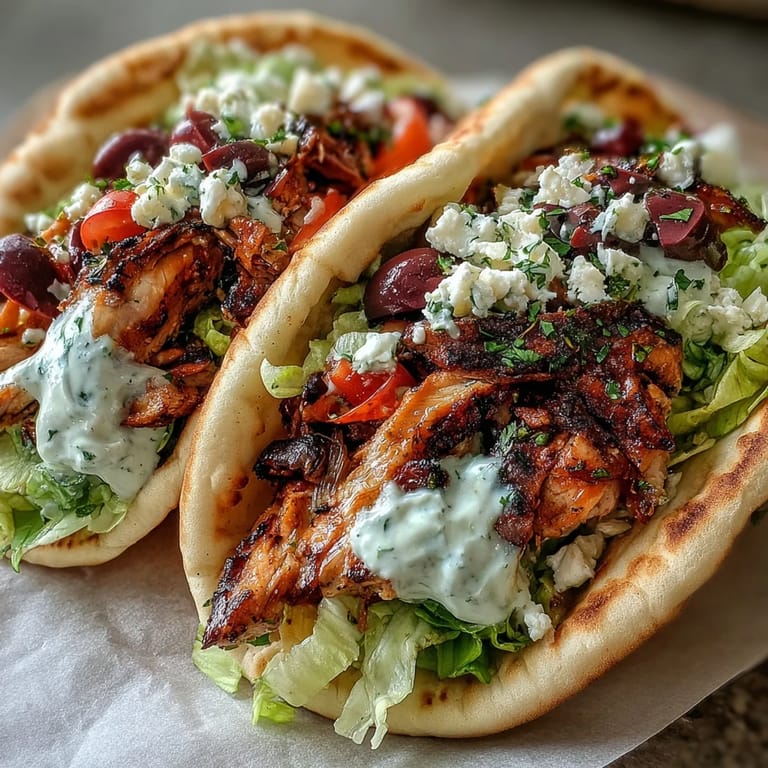
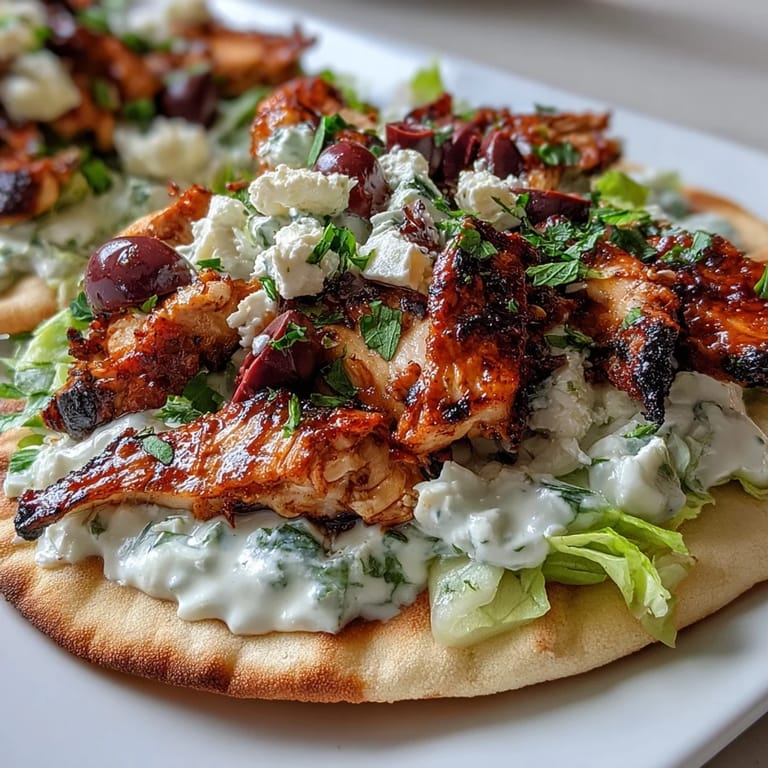
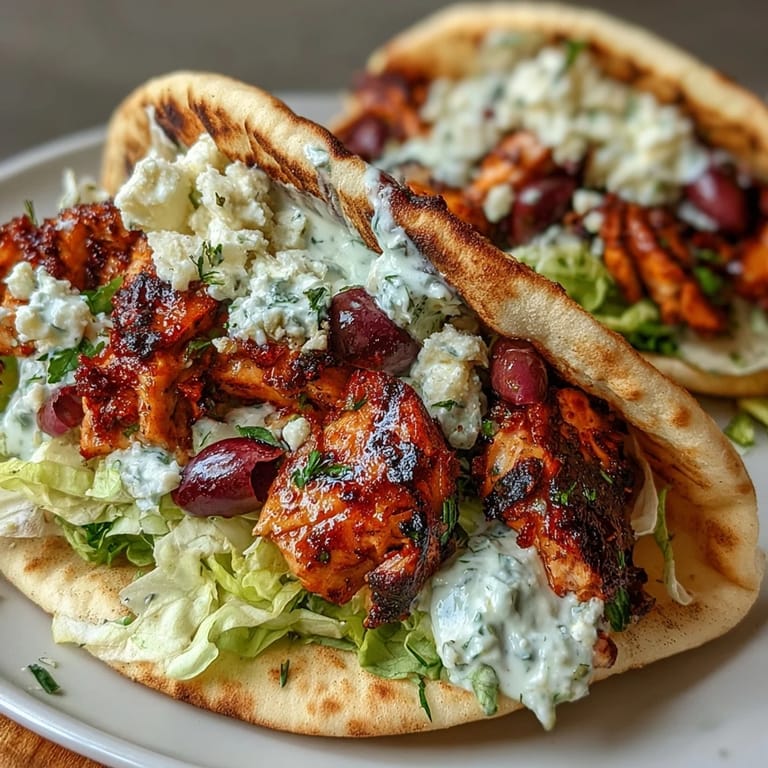
- Lay your warmed pita down, spread a generous dollop of creamy feta tzatziki in the center, then layer shredded romaine, diced tomatoes, red onion, and Kalamata olives. Top with your sliced chicken, another drizzle of tzatziki, fresh herbs, and squeeze fresh lemon juice over everything right before serving.
 Save
Save The best part about this recipe is how it brings people around your table without feeling like work. Something about building your own gyro makes people slow down and actually taste each component instead of just eating.
Why Marinating Matters Here
The difference between a marinated and unmarinated chicken gyro is honestly the difference between something delicious and something that tastes like you just grilled plain chicken. The lemon juice and olive oil work together to keep the meat tender while the oregano and garlic sink in deep, so the flavor isn't just on the surface—it's everywhere. Even if you only have 30 minutes, that's the minimum threshold; anything longer just makes it better.
The Tzatziki Secret That Nobody Talks About
Everyone focuses on the cucumber, but honestly, the ratio of yogurt to feta to garlic is where most people stumble. Too much feta and it becomes grainy and overpowering; too little and it tastes watered down and boring. The trick is using full-fat Greek yogurt as your base and then adding just enough feta to taste it without losing that creamy smoothness. I learned this after making about five batches that were either too aggressive or too shy, and now I eyeball it, but honestly, trusting your palate is half the fun.
Building Better Gyros at Home
The magic isn't just in the chicken or the sauce—it's in the balance of everything working together. Fresh, cold components against warm, charred meat create this textural contrast that makes every bite interesting, and the herbs and acidity brighten everything so nothing feels heavy even though you're eating something pretty rich.
- Toast your pita just enough to warm it through without making it crispy or you'll struggle to wrap anything inside.
- Keep your assembled components in separate bowls until you're actually building so nothing gets soggy or warm before you eat it.
- Don't skimp on the fresh herbs at the end—they look nice but more importantly, they add a fresh pop that ties the whole thing together.
 Save
Save This recipe has become my go-to when I want to feel like a confident cook without spending hours in the kitchen. It's simple enough for a weeknight but tasty enough that you'll find yourself making it again and again.
Recipe FAQs
- → How long should I marinate the chicken?
Marinate for at least 30 minutes, but 2 hours or overnight yields deeper flavor penetration and more tender meat.
- → Can I use chicken breasts instead of thighs?
Yes, though thighs remain juicier. If using breasts, slice thinly against the grain and avoid overcooking to prevent dryness.
- → What makes feta tzatziki different from traditional tzatziki?
The addition of crumbled feta cheese creates a richer, tangier, and creamier sauce with more depth than yogurt alone.
- → How do I prevent soggy pita bread?
Warm pitas right before serving and assemble just before eating. Spread tzatziki first to create a moisture barrier.
- → Can I make this ahead of time?
Marinate chicken up to 24 hours ahead. Prepare tzatziki 1-2 days in advance—flavors actually improve overnight.
- → What sides complement this dish?
Greek lemon potatoes, village salad (horiatiki), roasted vegetables, or rice pilaf make excellent accompaniments.