 Save
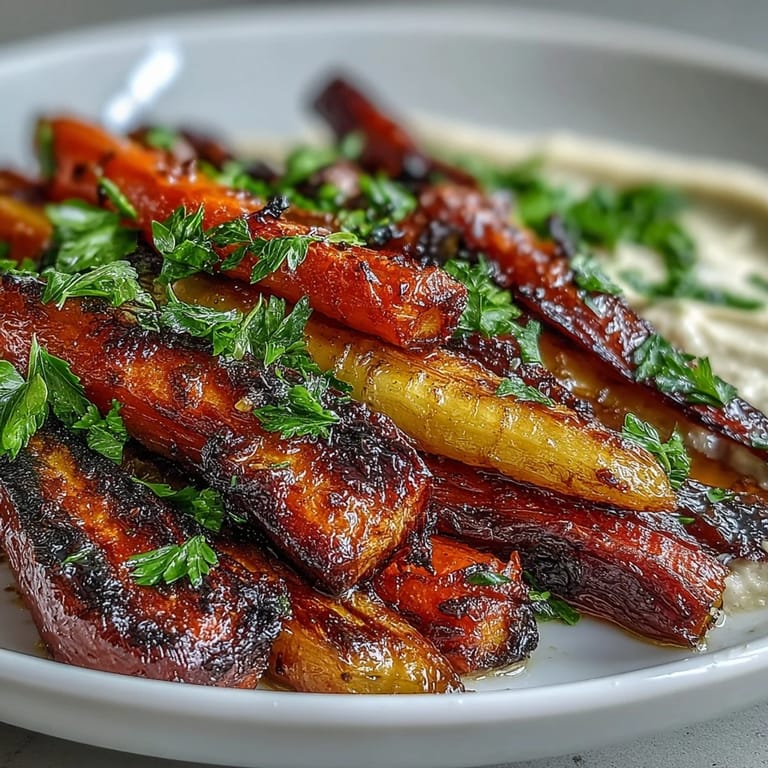
Save Last summer, I was tasked with bringing something to a potluck where everyone was trying to show off, and I decided to skip the complicated casseroles in favor of something that would actually get eaten. I roasted a bunch of rainbow carrots I'd picked up at the farmers market, made a silky hummus, and watched them disappear faster than anything else on the table. That afternoon taught me that the most impressive dishes are often the simplest ones, especially when they look as good as they taste.
My sister brought her new partner to dinner one night, and I wanted something that felt special but not stressful to prepare. I roasted these carrots while we had drinks in the kitchen, and the smell of caramelizing vegetables and toasting spices became its own kind of welcome. By the time everyone sat down, the hummus was whipped smooth and the carrots were still warm, and somehow that simple platter started a whole conversation about farmers markets and favorite vegetables.
Ingredients
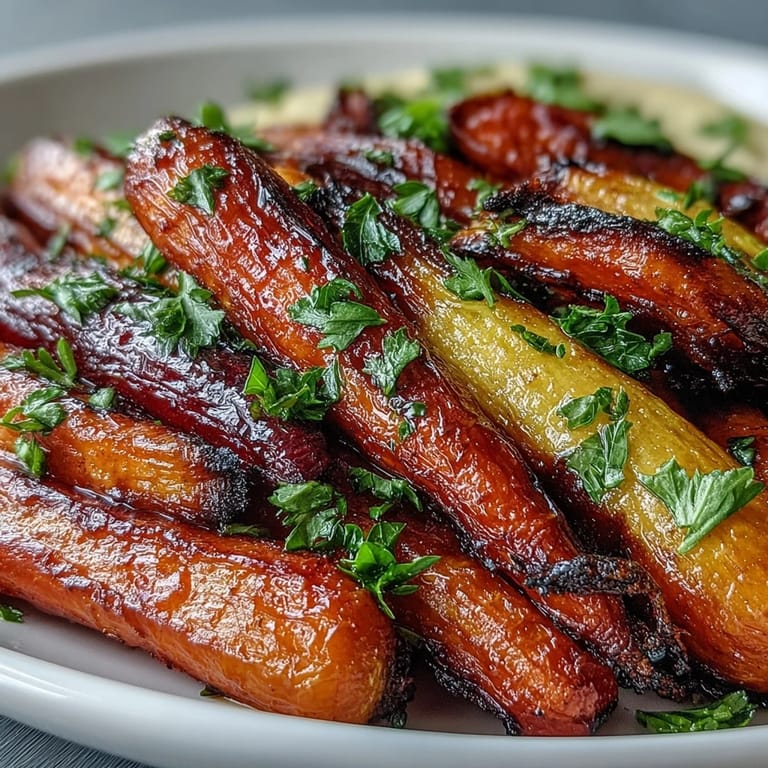
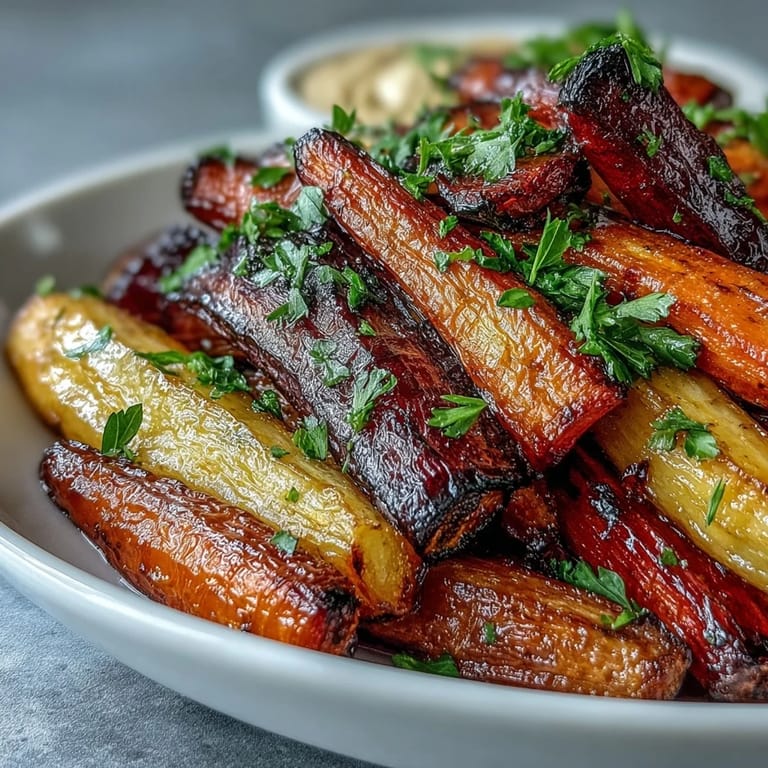
- Rainbow carrots (1 lb, peeled and trimmed): The variety of colors—purple, orange, yellow, red—is what makes this dish special visually, and they all roast to slightly different levels of sweetness depending on their pigment.
- Olive oil (2 tbsp for carrots, 2 tbsp for hummus): Use good quality extra-virgin for the hummus; it makes a noticeable difference in the final creamy texture and flavor.
- Sea salt and freshly ground black pepper: Freshly ground pepper has so much more life than the pre-ground kind, and it's worth the thirty seconds to grind it yourself.
- Ground cumin (1/2 tsp optional for carrots, 1/2 tsp for hummus): This spice ties both components together and adds warmth without being overtly spicy.
- Canned chickpeas (15 oz, drained and rinsed): Rinsing them removes excess starch and gives you a smoother, creamier hummus.
- Tahini (1/4 cup): This is the soul of the hummus; buy it from a reputable source because stale tahini tastes bitter and defeats the purpose.
- Fresh lemon juice (2 tbsp): Bottled lemon juice is convenient but fresh juice brightens the hummus in a way that canned simply cannot match.
- Garlic (1 clove, minced): One clove is plenty; you're not making a garlic paste, just adding a whisper of pungency.
- Cold water (2–3 tbsp as needed): Add it slowly while blending to control the texture—you're going for creamy, not soup.
- Smoked paprika (1/4 tsp for garnish, optional): A sprinkle on top adds color and a subtle smoky note that elevates the presentation.
- Fresh parsley (1 tbsp, chopped for garnish): The brightness of parsley complements the earthiness of roasted carrots.
Tired of Takeout? 🥡
Get 10 meals you can make faster than delivery arrives. Seriously.
One email. No spam. Unsubscribe anytime.
Instructions
- Heat your oven and prep the workspace:
- Preheat to 425°F and line a baking sheet with parchment paper so cleanup is effortless and nothing sticks. This temperature is hot enough to caramelize the natural sugars in the carrots without burning them.
- Season and arrange the carrots:
- Toss your rainbow carrots with olive oil, salt, pepper, and cumin if you're using it, then spread them in a single layer on the baking sheet. Don't overcrowd them; they need room to roast, not steam.
- Roast with a halfway turn:
- Pop them in the oven for 25–30 minutes, turning them over about halfway through so they caramelize evenly on all sides. You'll know they're done when they're fork-tender and the edges have a golden, slightly caramelized look.
- Build your hummus while the carrots cook:
- In a food processor, combine your drained chickpeas, tahini, olive oil, fresh lemon juice, minced garlic, cumin, and salt. Blend until the mixture is completely smooth and creamy, stopping to scrape down the sides as needed.
- Adjust the consistency and taste:
- Add cold water one tablespoon at a time while the processor is running until you reach the texture you want—it should be spreadable but not watery. Taste it and adjust the salt or lemon juice if needed; hummus should be well-seasoned and bright.
- Plate and serve:
- Spoon the hummus into a serving bowl, drizzle with a bit of olive oil, and sprinkle with smoked paprika for color. Arrange the warm roasted carrots on a platter alongside it, garnish with fresh parsley, and let everyone help themselves.
 Save
Save There was an evening when my nephew, who's usually picky about vegetables, actually asked for seconds on the roasted carrots. His mom looked at me with surprise, and I realized that sometimes the best cooking isn't about impressing adults—it's about making someone discover that vegetables can actually taste good. That moment was worth more than any dinner party compliment.
The Magic of Caramelization
Roasting vegetables is one of those cooking techniques that feels almost like magic once you understand what's happening. The heat draws out the natural sugars in the carrots and concentrates them, creating those caramelized edges that are deep and sweet. Temperature matters here; you want it hot enough to brown them quickly but not so hot that they burn before they soften. This is also why a single layer on the pan is non-negotiable—crowded carrots steam instead of roast, and you lose that beautiful caramelized crust.
Why Homemade Hummus Changes Everything
Making hummus at home is one of those small kitchen revelations that shifts how you think about store-bought versions. The difference is in the tahini, the brightness of fresh lemon, and the fact that you control exactly how creamy it is. I learned this the hard way after serving a batch of overly processed, gluey hummus to guests and having to explain why it was nothing like what they expected. Now I always make it fresh, and the five minutes of processor time feels like time well spent when I taste the result.
Serving Suggestions and Flavor Combinations
This platter works beautifully on its own, but it's also incredibly flexible depending on what else you're serving or what mood you're in. Some nights I add toasted sesame seeds or dukkah to the carrots for crunch, and other times a pinch of chili flakes transforms the whole thing into something with a gentle heat. Serve it with additional raw vegetables like cucumbers, bell peppers, or radishes, or alongside warm pita bread if you want something more substantial. The hummus is also great on grain bowls, smeared on sandwiches, or eaten straight from the spoon when you're standing at the kitchen counter at midnight.
- Toast sesame seeds in a dry pan until fragrant, then scatter them over the finished dish for an extra layer of flavor and texture.
- Make a spicy version by adding a pinch of cayenne or chili flakes to both the carrots and the hummus if your crowd likes heat.
- Prepare everything ahead of time and reheat the carrots gently in the oven just before serving so everything tastes fresh and warm.
 Save
Save This recipe has become my default contribution to gatherings because it's foolproof, beautiful, and genuinely delicious. Every time someone asks for the recipe or compliments the colors on the platter, I'm reminded that the best meals are the ones made with intention and served with joy.
Recipe FAQs
- → What makes rainbow carrots special?
Rainbow carrots come in purple, orange, yellow, and white varieties. Each color offers slightly different flavor notes, from sweet to earthy, while adding vibrant visual appeal to your platter.
- → Can I make the hummus ahead of time?
Yes, homemade hummus stores well in the refrigerator for up to five days. The flavors actually develop and improve after a day, making it perfect for meal prep.
- → How do I know when the carrots are done roasting?
The carrots are ready when they're tender when pierced with a fork and have visible golden-brown caramelization spots. This typically takes 25-30 minutes at 425°F.
- → What can I serve with this platter?
Pair with warm pita bread, raw vegetables like cucumber and bell peppers, or olives. The combination works well for gatherings, parties, or casual weekday snacking.
- → Is this dish suitable for dietary restrictions?
This platter is naturally vegan and gluten-free. Avoid serving with pita bread to maintain gluten-free status, and ensure your tahini is certified gluten-free if needed.
- → Can I use regular orange carrots?
Absolutely. Regular carrots work perfectly fine and taste delicious. Rainbow carrots simply add visual variety, but the roasting method and seasonings work with any carrot type.