 Save
Save My neighbor knocked on my door one Thursday evening holding a casserole dish, asking if I knew how to fix a chicken breast that kept drying out. We ended up in my kitchen, and I showed her how stuffing keeps everything moist and flavorful. That improvised lesson turned into this recipe, and now she makes it every other week. Sometimes the best recipes come from solving someone else's dinner crisis.
I made this for my sister's birthday dinner last spring, and she requested it again for Thanksgiving instead of turkey. The kitchen smelled like an Italian grandmother had taken over, even though I was just winging it with what I had in the fridge. Everyone went quiet during the first few bites, which is always a good sign. My brother-in-law asked for the recipe three times before dessert.
Ingredients
- Boneless, skinless chicken breasts: Choose breasts that are similar in size so they cook evenly, and pound them lightly if one is much thicker than the others.
- Ricotta cheese: Full-fat ricotta gives the creamiest texture, but part-skim works if you want to lighten it up without losing too much richness.
- Fresh baby spinach: Chop it finely so it blends into the filling without creating big leafy pockets that make stuffing difficult.
- Parmesan cheese: Freshly grated melts better and tastes sharper than the pre-shredded kind, which often has anti-caking agents.
- Lemon zest: Just half a lemon's worth brightens the whole filling and cuts through the richness in a way you'll notice but can't quite name.
- Crushed tomatoes: San Marzano tomatoes are worth it if you can find them, they're sweeter and less acidic than most canned varieties.
- Garlic cloves: Mince them finely for the filling so you don't bite into a strong chunk, but rough chop is fine for the sauce.
- Dried Italian herbs and oregano: If your dried herbs have been in the cupboard for over a year, replace them, the flavor fades faster than you'd think.
- Olive oil: Use it for both searing and sautéing, it handles the heat well and adds a subtle fruity note to the sauce.
- Sugar: A small amount balances the acidity of the tomatoes without making the sauce taste sweet.
Tired of Takeout? 🥡
Get 10 meals you can make faster than delivery arrives. Seriously.
One email. No spam. Unsubscribe anytime.
Instructions
- Preheat and Prep:
- Set your oven to 375°F and get your ingredients organized on the counter. This is one of those recipes where having everything ready makes the actual cooking feel easy and relaxed.
- Mix the Filling:
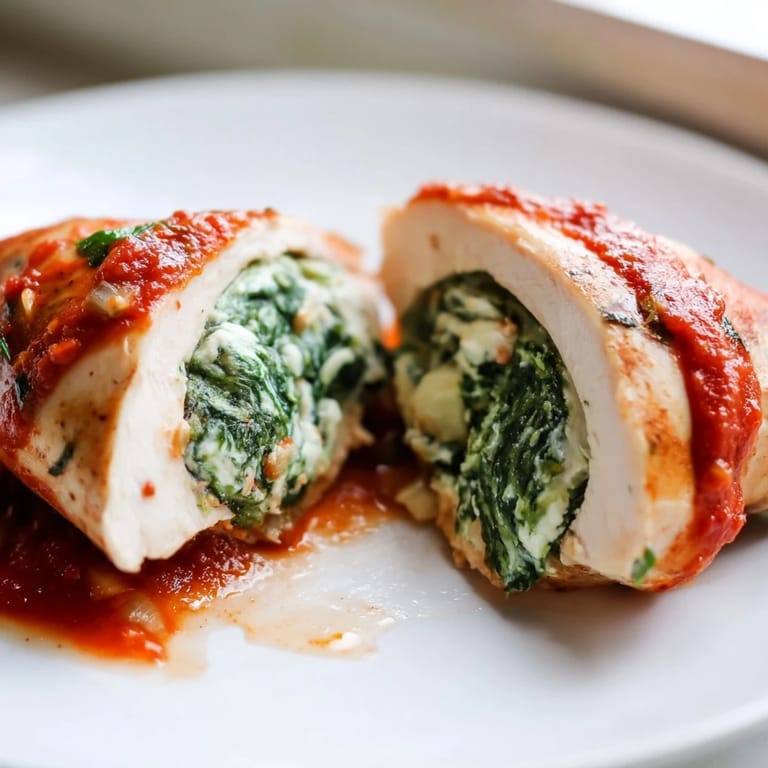
- Combine ricotta, chopped spinach, Parmesan, garlic, Italian herbs, lemon zest, salt, and pepper in a bowl until it looks like a thick, flecked paste. Taste it and adjust the seasoning now, because you can't fix it once it's inside the chicken.
- Create the Pockets:
- Lay each chicken breast flat and carefully slice horizontally through the thickest part, stopping before you cut all the way through so it opens like a book. Season both sides with salt and pepper, don't skip this step or the chicken itself will taste bland.
- Stuff the Chicken:
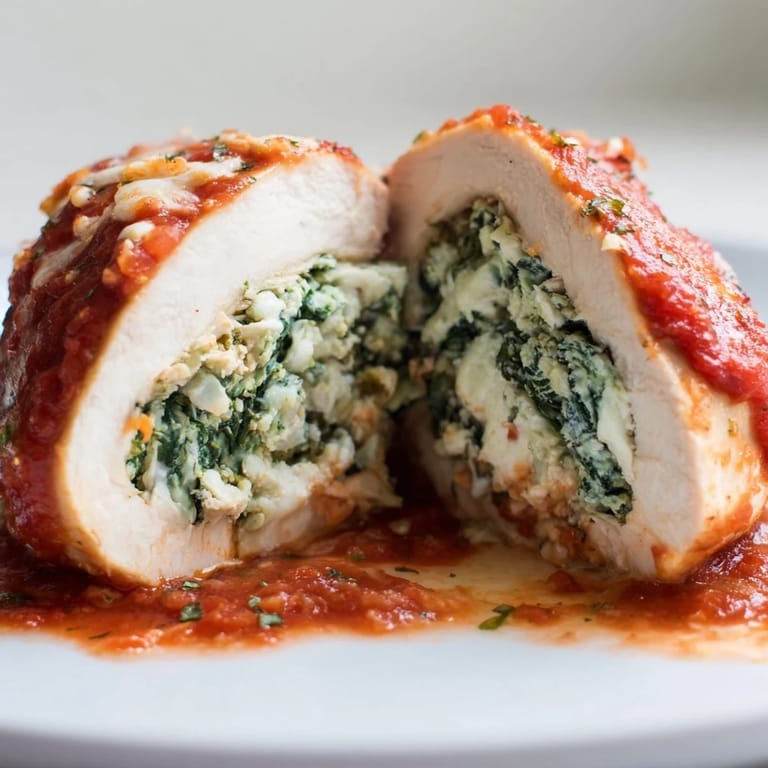
- Spoon a generous amount of filling into each pocket and press gently to spread it around. Secure with toothpicks if the opening is wide, but sometimes the chicken holds itself closed once you sear it.
- Sear for Color:
- Heat olive oil in an oven-safe skillet over medium-high heat until it shimmers, then sear each stuffed breast for 2 to 3 minutes per side until golden. You're building flavor here, not cooking it through, so don't worry if it's still pink inside.
- Build the Sauce:
- In the same skillet, add a little more oil and sauté the chopped onion until soft and translucent, about 3 minutes, then toss in the garlic for another minute. Stir in the crushed tomatoes, oregano, sugar, salt, and pepper, and let it simmer for 5 minutes to thicken slightly.
- Nestle and Bake:
- Place the seared chicken breasts into the sauce, spooning some over the tops so they stay moist. Transfer the whole skillet to the oven and bake uncovered for 20 to 25 minutes, until the internal temperature hits 165°F.
- Finish and Serve:
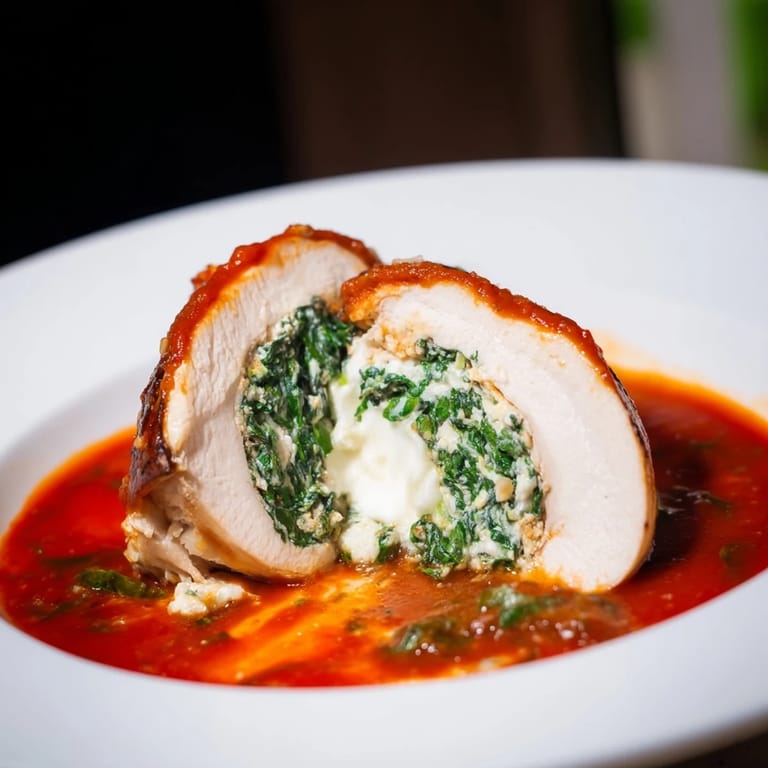
- Pull out the toothpicks if you used them, sprinkle with extra Parmesan or torn fresh basil, and serve straight from the skillet. The chicken should be juicy, the filling creamy, and the sauce clinging to everything.
 Save
Save The first time I served this, my youngest asked if we could have it for her next three birthdays in a row. It's become the meal I make when I want to feel like I have my life together, even on weeks when I absolutely don't. There's something about pulling a bubbling skillet out of the oven that makes everything else feel manageable.
Choosing the Right Chicken
I've learned that thinner chicken breasts are easier to stuff and cook more evenly than the giant ones. If you end up with thick breasts, place them between plastic wrap and gently pound them to an even thickness with a rolling pin or the bottom of a heavy pan. You're not trying to flatten them completely, just make sure one end isn't twice as thick as the other. Uniform thickness means uniform cooking, and that's the difference between juicy and dry.
Adjusting the Filling
Some nights I'll throw in sun-dried tomatoes or a handful of chopped artichoke hearts if I have them. If you're not a spinach fan, kale works beautifully, just make sure to remove the thick stems and chop it finer. I've also swapped in goat cheese for half the ricotta when I want something tangier. The filling is forgiving, so feel free to make it your own based on what's in your fridge.
Serving and Pairing Ideas
This pairs beautifully with crusty bread for soaking up the tomato sauce, or you can serve it over pasta if you want to stretch it for more people. A simple arugula salad with lemon vinaigrette cuts through the richness and keeps the meal from feeling too heavy. I've also served it with roasted vegetables or creamy polenta, both soak up the sauce and make the plate look like you put in way more effort than you did.
- Add a pinch of red pepper flakes to the sauce if you like a little heat.
- Garnish with fresh basil or parsley right before serving for a pop of color and freshness.
- Leftovers can be sliced and tucked into sandwiches or served cold over greens for lunch.
 Save
Save This recipe has become my go-to whenever I need to remind myself that cooking doesn't have to be complicated to feel special. I hope it lands on your table with the same warmth it's brought to mine.
Recipe FAQs
- → How do I prevent the chicken from drying out?
Pound the chicken breasts to an even thickness before stuffing, which ensures even cooking. Don't skip the searing step—it creates a golden exterior that seals in moisture. Bake uncovered at 375°F until the internal temperature reaches 165°F, typically 20–25 minutes.
- → Can I prepare this dish in advance?
Yes, you can stuff the chicken breasts up to 4 hours ahead and refrigerate them covered. You can also make the tomato sauce a day in advance. When ready to cook, allow the chicken to reach room temperature for 15 minutes before searing and baking.
- → What's the best way to stuff the chicken without it falling apart?
Make a careful horizontal pocket using a sharp knife, cutting parallel to the cutting board without piercing the sides or bottom. Fill gently with the ricotta mixture, then use toothpicks to secure the opening if needed. Toothpicks keep the filling intact during searing and baking.
- → Can I use frozen spinach instead of fresh?
Absolutely. Use 1/2 cup of frozen spinach, thawed and squeezed dry to remove excess moisture. This prevents the filling from becoming watery and maintains the proper texture and flavor balance.
- → What side dishes pair well with this meal?
Serve alongside creamy polenta, roasted vegetables like zucchini or bell peppers, or a crisp arugula salad dressed with lemon vinaigrette. Crusty bread is perfect for soaking up the tomato sauce, or pair with pasta like pappardelle or fettuccine.
- → How do I know when the chicken is fully cooked?
Use an instant-read meat thermometer inserted into the thickest part of the chicken without touching the filling. The internal temperature should reach 165°F (74°C). Alternatively, pierce with a knife—the juices should run clear with no pink.